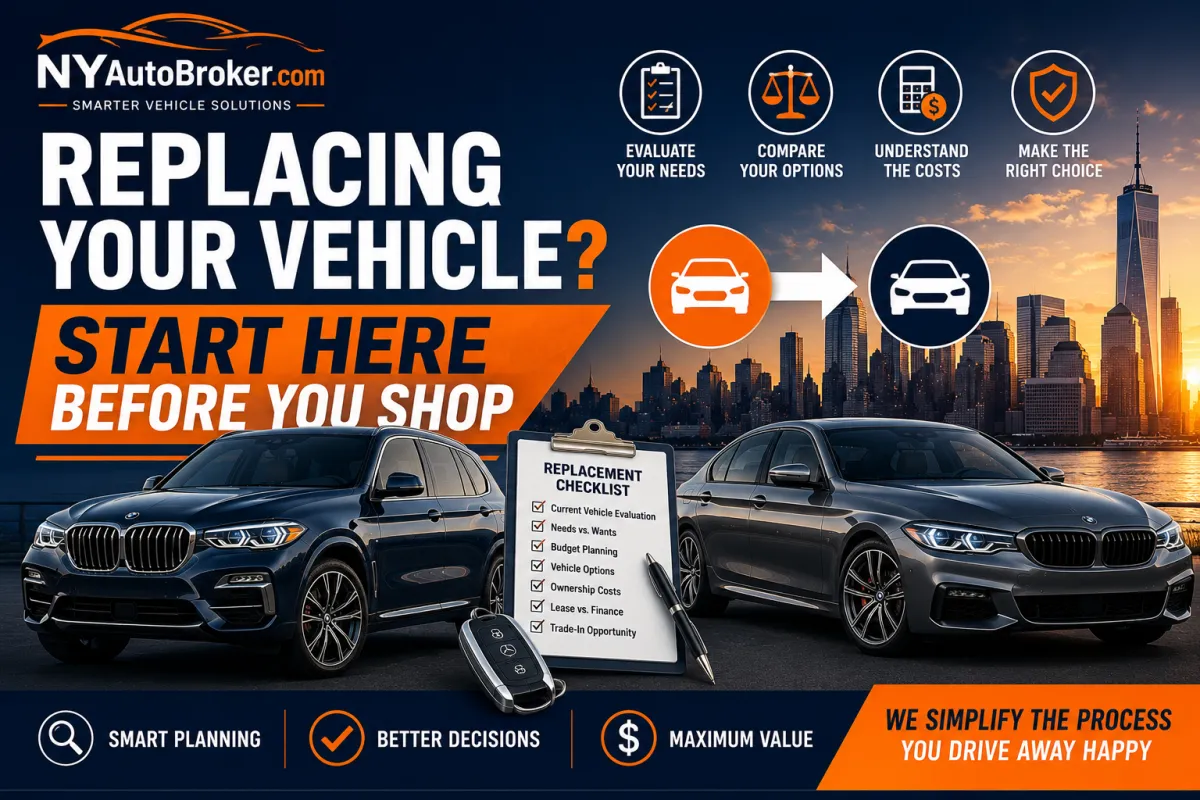
Replacing Your Vehicle? Start Here Before You Shop
Replacing Your Vehicle? Start Here Before You Shop
Replacing a vehicle is exciting, but it can also become overwhelming very quickly.
Many drivers begin their search by looking at vehicle advertisements, dealership websites, or monthly payment offers. While those resources can be helpful, starting there often leads to confusion, frustration, and poor decisions.
Before you begin shopping for your next vehicle, it's important to understand your needs, your budget, and the options available to you.
The more preparation you do before shopping, the easier the process becomes.
Why Are You Replacing Your Vehicle?
The first question to ask is simple:
Why are you replacing your current vehicle?
Common reasons include:
Lease maturity
High mileage
Growing family
New job or commute
Reliability concerns
Technology upgrades
Better fuel efficiency
Desire for a different vehicle type
Understanding your motivation helps narrow the field and prevents unnecessary spending.
Evaluate Your Current Vehicle
Before looking at replacements, take inventory of your current situation.
Consider:
Current mileage
Vehicle condition
Loan payoff balance
Lease payoff amount
Trade-in value
Existing warranty coverage
Many vehicle owners discover they have more flexibility than they initially expected.
In some cases, positive equity may help reduce the cost of the next vehicle.
Define Your Needs Before Your Wants
It's easy to fall in love with a vehicle before determining whether it actually fits your lifestyle.
Start with practical considerations:
Passenger Capacity
How many people regularly ride with you?
Cargo Requirements
Do you transport equipment, strollers, sports gear, or work materials?
Commute Distance
Will fuel economy or electric range play an important role?
Parking Considerations
Will a larger vehicle make city parking more difficult?
Weather Conditions
Do you benefit from all-wheel drive?
Answering these questions creates a clearer picture of the vehicle that best fits your needs.
Explore Vehicle Categories
Today's market offers more choices than ever.
Popular options include:
Sedans
Ideal for efficiency, commuting, and ease of parking.
SUVs
Excellent for families, cargo flexibility, and all-weather capability.
Trucks
Useful for towing, work applications, and heavy-duty transportation.
Hybrid Vehicles
Combine fuel savings with traditional gasoline convenience.
Electric Vehicles
Offer reduced fuel costs and advanced technology.
Each category comes with unique advantages depending on your driving habits.
Consider Ownership Costs
Many shoppers focus exclusively on monthly payments.
However, total ownership costs often tell a different story.
Consider:
Insurance
Registration
Fuel costs
Maintenance
Tires
Warranty coverage
Depreciation
A lower payment doesn't always mean lower overall cost.
Lease or Finance?
One of the biggest decisions is whether to lease or finance.
Leasing may appeal to drivers who:
Prefer newer vehicles
Drive predictable mileage
Enjoy updated technology
Financing may appeal to drivers who:
Keep vehicles longer
Drive higher mileage
Prefer ownership
There is no universal answer.
The best choice depends on your goals and driving habits.
Common Replacement Vehicle Mistakes
Shopping Payment First
Monthly payments can be manipulated through term length, down payment, and financing structure.
Always evaluate the entire transaction.
Falling in Love Too Early
Stay objective until you've compared multiple options.
Ignoring Insurance Costs
Some vehicles may carry significantly higher insurance premiums.
Skipping the Test Drive
Features and specifications rarely tell the entire story.
A vehicle that looks perfect on paper may feel completely different in person.
Timing Your Replacement
Vehicle markets constantly change.
Factors that influence timing include:
Manufacturer incentives
Inventory levels
Seasonal demand
Interest rates
Lease-end deadlines
Planning several months in advance often provides the most flexibility.
What Should You Do Next?
The best replacement vehicle isn't necessarily the most expensive vehicle or the newest model.
It's the vehicle that fits your lifestyle, budget, and long-term goals.
By evaluating your current vehicle, understanding your needs, comparing options, and planning ahead, you can make a more confident decision while avoiding common mistakes.
At NYAutoBroker.com, we help drivers compare options, evaluate trade-ins, review lease-end opportunities, and develop personalized vehicle replacement strategies that fit their needs.