7 Documents You Need Before Requesting an Insurance Quote
7 Documents You Need Before Requesting an Insurance Quote
Shopping for vehicle insurance is easier when you have the right information available before requesting a quote.
Many drivers are surprised to learn that missing documentation can delay the process, create inaccurate estimates, or prevent insurance providers from offering their most competitive rates.
Whether you're replacing a vehicle, purchasing your first car, adding a family member, or simply reviewing your current coverage, gathering these documents ahead of time can save time and frustration.
Why Preparation Matters
Insurance companies calculate rates using information about:
The driver
The vehicle
Driving history
Existing coverage
Vehicle usage
The more accurate the information you provide, the more accurate your quote will be.
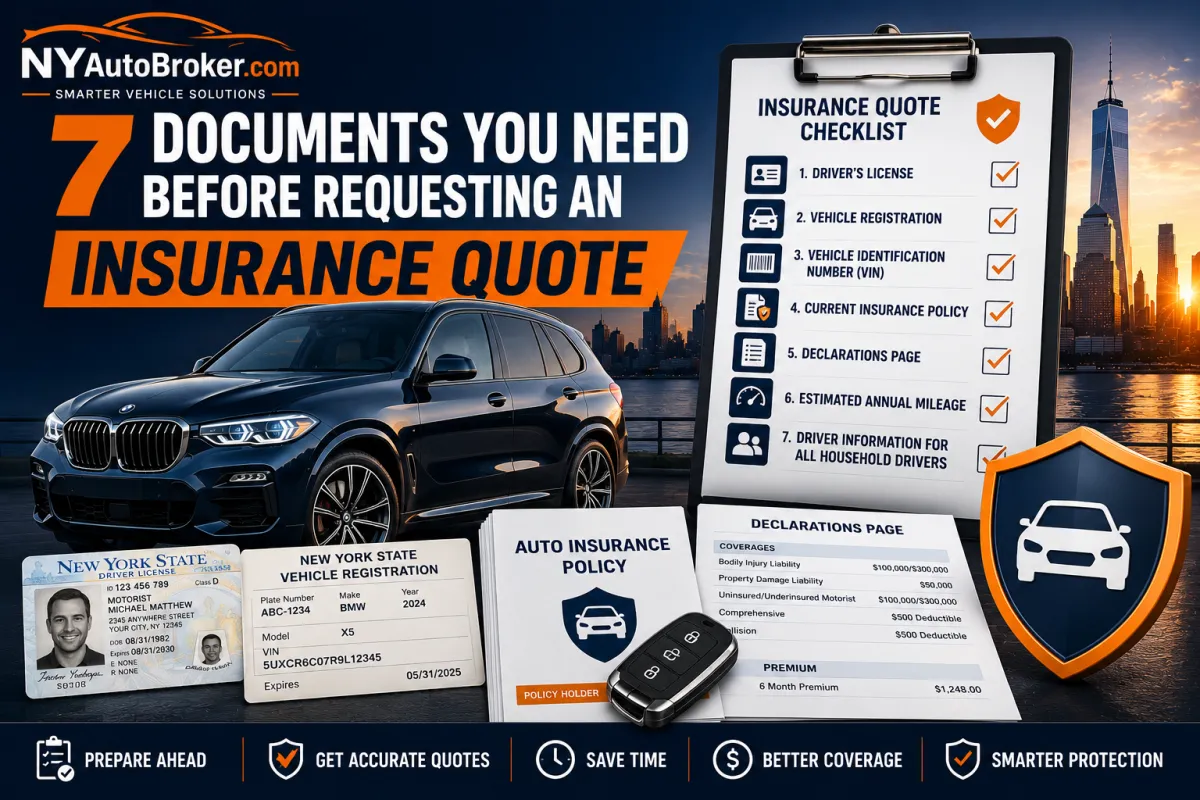
1. Driver's License
Your driver's license is one of the most important documents required during the quoting process.
Insurance carriers use license information to verify:
Driver identity
License status
Years of driving experience
State of residence
Having a clear photo of your license available can help streamline the process.
2. Vehicle Registration
Your registration provides key vehicle information including:
Vehicle Identification Number (VIN)
Year
Make
Model
Ownership information
This helps ensure the quote is based on the correct vehicle.
3. Vehicle Identification Number (VIN)
While the VIN often appears on the registration, having it readily available is always helpful.
The VIN allows insurance providers to verify:
Vehicle specifications
Safety equipment
Trim level
Vehicle history data
Even similar vehicles can produce different insurance rates.
4. Current Insurance Policy
If you're already insured, having a copy of your current policy is extremely valuable.
This allows the insurance professional to review:
Coverage limits
Deductibles
Endorsements
Additional protections
Comparing policies helps ensure you understand what may change.
5. Current Insurance Declarations Page
Your declarations page summarizes your existing coverage.
This document often contains:
Liability limits
Comprehensive coverage
Collision coverage
Deductibles
Premium information
Providing this document helps create a more accurate comparison.
6. Estimated Annual Mileage
Insurance companies frequently ask how much you drive each year.
Mileage impacts risk calculations and may affect pricing.
Be prepared to provide an estimate based on:
Daily commuting
Personal travel
Business use
Seasonal driving habits
Accurate mileage information is important.
7. Driver Information for All Household Drivers
If multiple people will drive the vehicle, insurance providers typically need information for each licensed driver in the household.
This may include:
Name
Date of birth
Driver's license information
Relationship to the policyholder
Providing complete information helps avoid delays.
Common Mistakes to Avoid
Guessing Vehicle Information
Always verify information directly from your registration or VIN.
Forgetting Household Drivers
Insurance companies often require disclosure of household drivers.
Not Reviewing Current Coverage
Many drivers focus only on price and overlook important coverage differences.
Choosing Deductibles Without Understanding Them
Lower deductibles often increase premiums, while higher deductibles may reduce premiums but increase out-of-pocket costs after a claim.
What Should You Do Next?
Before requesting an insurance quote, gather these documents and review your current coverage.
A few minutes of preparation can lead to more accurate pricing, faster service, and better-informed insurance decisions.
At NYAutoBroker.com, we help drivers review insurance options, compare coverage, and simplify the process of obtaining vehicle insurance quotes.