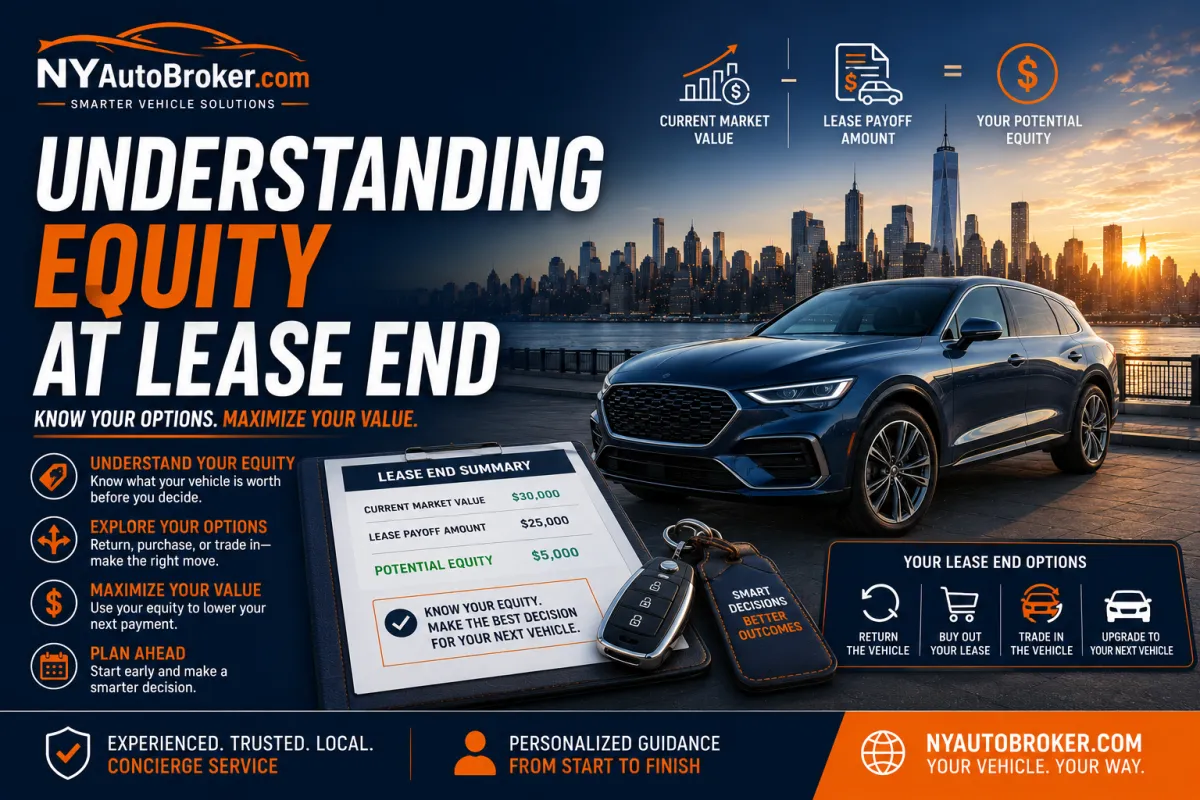
Understanding Equity at Lease End
Understanding Equity at Lease End
Many drivers approach the end of their lease assuming they have only one option: return the vehicle and walk away.
However, today's automotive market has created situations where some leased vehicles may be worth more than the amount required to purchase them at lease end.
This difference is commonly referred to as equity.
Understanding how equity works can help you make a more informed decision when your lease approaches maturity.
What Is Vehicle Equity?
Equity is the difference between what a vehicle is currently worth and what is owed on it.
A simple example:
Current vehicle market value: $30,000
Lease payoff or buyout amount: $25,000
Potential equity: $5,000
In this example, the vehicle may be worth more than the amount required to purchase it.
Not every lease will have equity, but it's important to understand whether it exists before making a decision.
Why Equity Exists
Vehicle values constantly fluctuate based on market conditions.
Several factors can influence value:
Vehicle demand
Fuel prices
Inventory shortages
Vehicle condition
Mileage
Service history
Manufacturer reputation
When used vehicle demand increases, some leased vehicles may retain value better than originally projected.
Why Many Drivers Never Discover Their Equity
Many consumers simply return their vehicle when their lease ends.
Unfortunately, this can sometimes mean missing opportunities that may exist.
Before returning a leased vehicle, it's often helpful to compare:
Current market value
Lease buyout amount
Replacement vehicle options
Trade-in opportunities
Understanding all available choices can lead to better financial outcomes.
What Is a Lease Buyout?
A lease buyout is the amount required to purchase your leased vehicle.
This amount is typically established when the lease begins and is often referred to as the residual value.
At lease end, you may have the option to:
Return the vehicle
Purchase the vehicle
Explore replacement vehicle options
Evaluate trade-in opportunities
Each option has advantages depending on your situation.
Factors That Affect Equity
Vehicle Condition
Vehicles that are well maintained often retain stronger value.
Mileage
Lower mileage generally improves market value.
Vehicle Popularity
High-demand vehicles often perform better in the used vehicle market.
Market Conditions
Changes in supply and demand can significantly affect resale values.
Positive Equity vs Negative Equity
Positive Equity
Occurs when the vehicle is worth more than the payoff amount.
Potential benefits may include:
Lower replacement vehicle costs
Reduced monthly payments
Greater flexibility when replacing your vehicle
Negative Equity
Occurs when the payoff amount exceeds the vehicle's market value.
This situation may require additional planning before replacing the vehicle.
Common Lease-End Mistakes
Returning the Vehicle Without Research
Understanding current value is important before making a final decision.
Assuming All Leases Have No Equity
Every vehicle and market situation is different.
Waiting Until the Last Minute
Exploring options several months before lease maturity often provides more flexibility.
What Should You Do Before Lease End?
If your lease is ending within the next six months, consider:
Reviewing your lease payoff amount
Determining current vehicle value
Evaluating replacement options
Reviewing potential trade-in opportunities
Having this information before your lease matures can help you avoid surprises and make a more informed decision.
What Should You Do Next?
Lease-end decisions can have a significant impact on your next vehicle transaction.
Understanding whether your vehicle has equity—and how that equity might be used—can help you maximize your options.
At NYAutoBroker.com, we help drivers evaluate lease-end opportunities, understand vehicle equity, compare replacement strategies, and navigate the vehicle buying process with personalized guidance.