Trade-In Strategy Guide
Buying a New Car With a
Trade-In
Master the trade-in process by obtaining separate written line items and comparing the complete transaction, focusing on vehicle valuation and new-car negotiation with neutral guidance.
Strategy-first approach
The Strategic Rule
Quick Answer: Treat the Purchase and Trade as Separate Figures
When dealerships combine your new vehicle's purchase price with your trade-in's valuation into a single transaction number, it naturally obscures the true mathematical baseline. To maintain clarity and leverage throughout the process, always establish the final purchase price of the new vehicle first. Only after that figure is locked in writing should you introduce your trade-in for an independent valuation.
PREPARATION PHASE
Gather Your Vehicle, Title, and Payoff Information
Before requesting offers, gather accurate information about the vehicle, ownership or lien, condition, mileage, and history so each provider evaluates the same facts.
- Exact year, make, trim, and installed factory options
- Current mileage reading and comprehensive service records
- Any documented accident history or cosmetic damage
- Physical copy of your clean title if owned outright
Estimate Trade Value With Current Written Offers
Do not rely on verbal estimates or general market ranges. A successful trade-in negotiation requires hard documentation and leverage. Ensure you have the following ready before initiating discussions:
- A recent lender payoff statement; the valid period depends on the lender.
- Current written offers from more than one source when practical
- An objective, documented assessment of your vehicle's condition tier
- A direct comparison against the dealer's preliminary trade-in allowance
TRANSACTION STRATEGY
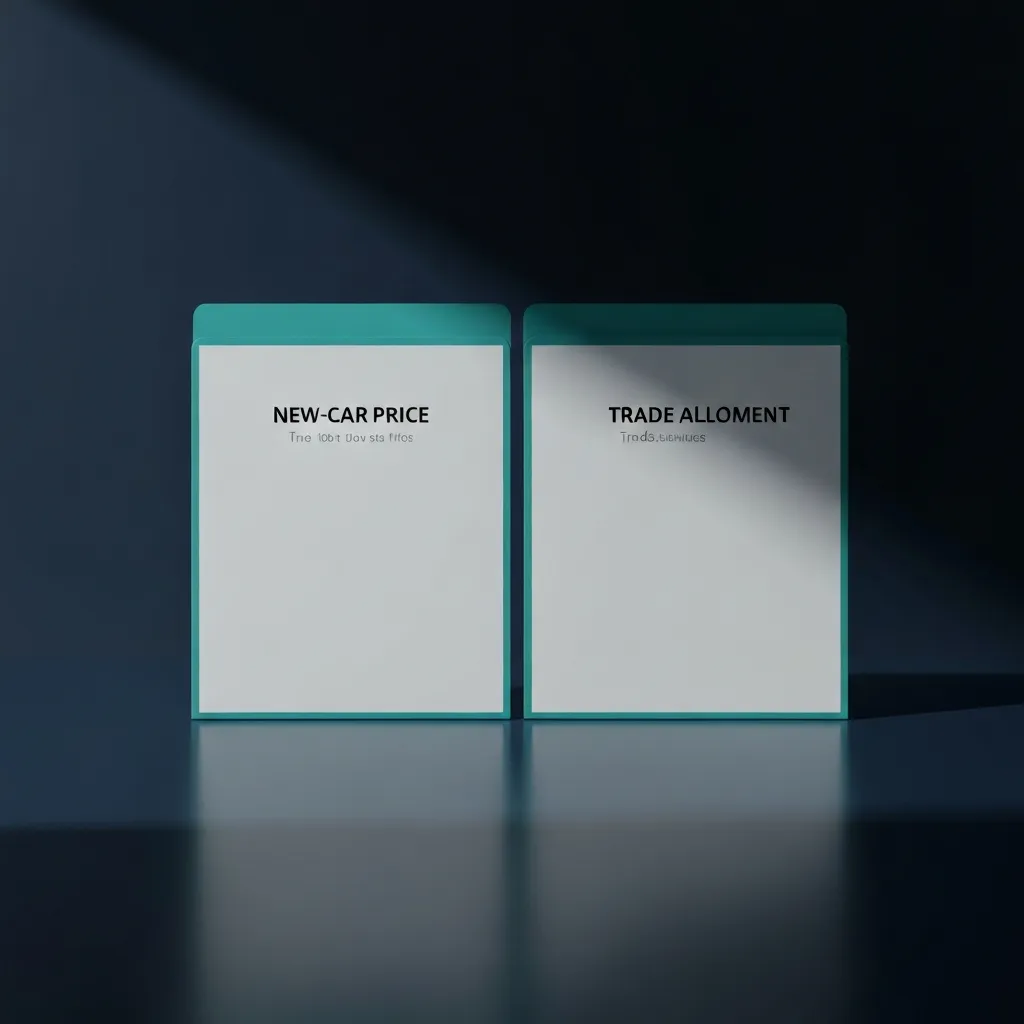
Negotiate the New-Car Price and Trade Allowance Separately
Dealers often prefer to blend the new car price, trade-in value, and financing terms into a single monthly payment discussion. This practice obscures the actual numbers, making it difficult to determine whether you are receiving fair market value for your trade-in or paying the right price for the new vehicle. By isolating these transactions, you maintain full visibility and control over each component of the deal.

FINANCIAL POSITION
Positive Equity and Negative Equity Explained
Before evaluating any trade-in offer, it is essential to calculate your current equity position. This is determined by comparing the dealership's trade-in allowance against your outstanding loan balance.
- Positive Equity: The trade-in allowance exceeds your loan payoff, providing a credit toward your next transaction.
- Negative Equity: The loan payoff exceeds the trade-in allowance, resulting in a deficit that must be covered out of pocket or rolled into a new loan.
- Zero Equity: The allowance exactly matches your payoff amount, leaving neither a credit nor a deficit.
EVALUATING YOUR OPTIONS
Dealer Trade-In vs Private Sale
Understanding the operational and financial trade-offs between trading your vehicle to a dealer and selling it on the open market.
Dealer Trade-In
- Tax and DMV treatment: New York tax and DMV treatment can vary by transaction and current rules. Verify how the figures are calculated in writing with official state information or a qualified tax professional.
- Convenience and timing: A dealer trade may be faster and may reduce the steps you handle yourself, depending on the provider and situation.
- Paperwork and payment safety: Compare how title/lien, payoff handling, and payment steps will work in writing (including timing and any hold periods).
- Net outcome: Compare the written, all-in numbers you would receive or pay after fees, payoff, and required steps rather than assuming one path is always better.
Private Sale
- Tax and DMV treatment: Private sales and dealer trades may be treated differently under current New York rules. Verify the written calculation with official state information or a qualified tax professional.
- Timing and logistics: You may need to manage listing, showings, transportation, and scheduling before you can complete the sale.
- Paperwork and payment safety: Confirm the steps for title/lien transfer, buyer verification, and secure payment methods before proceeding.
- Net outcome: Compare the written net amount (after any payoff and costs to sell) versus a dealer’s written trade figures to decide which fits your timeline and risk tolerance.
* Tax and DMV considerations depend on official New York rules and are subject to change. This comparison is for educational purposes only and does not constitute legal or tax advice.
ANALYSIS GUIDE
How to Read an Itemized New-Car and Trade-In Offer
New York Tax, DMV, and Transaction Considerations
New York tax and DMV treatment can depend on the transaction and current rules. Dealer trades and private sales may be treated differently. Verify the written calculation with official state information or a qualified tax professional.
Disclaimer: Always verify tax calculations and registration requirements directly with the NYS DMV or a certified professional.
TRANSPARENCY TOOL
Itemized Analysis Worksheet
Use this structured breakdown during your negotiation to ensure every figure is accounted for, independently verified, and fully understood before signing.
| Written Line Item | What It Means | Number to Verify | Question to Ask |
|---|---|---|---|
| Trade Allowance | The gross amount offered for your current vehicle before any deductions. | Written trade allowance amount. | "Is this the gross trade allowance, and is any payoff handled as a separate line item?" |
| New Car Price | The negotiated selling price of the replacement vehicle. | Written new-car selling price. | "What is the selling price before taxes, fees, and optional products?" |
| Payoff Amount | The exact balance owed on your current loan or lease. | Recent lender payoff statement. | "What payoff amount are you using, and what date does it apply through?" |
| Fees & Taxes | State taxes, documentation, and registration charges. | Itemized taxes and fees. | "Can you provide the taxes and fees as separate, itemized written line items?" |
| Optional Products | Optional products, protections, or add-ons that may be offered as part of the transaction. | Optional products and itemized charges. | "Which items here are optional, and what is the itemized price for each?" |
| Total Amount Due | The total amount due to complete the transaction, including all credits, payoffs, taxes, fees, and optional products. | Total amount due. | "Can you confirm the out-the-door total and show how each line item rolls up to that figure?" |
FINAL PREPARATION
Day-of-Transaction Checklist
Arrive at the dealership fully prepared. A smooth transaction requires the right documentation and a clear strategy to avoid last-minute pitfalls.
What to Bring With You
- All vehicle keys, key fobs, and owner's manuals for the trade-in.
- Valid Driver's License for all buyers listed on the title.
- Current Vehicle Registration and Proof of Insurance.
- Recent lender payoff statement, when a loan or lien applies.
- Physical Vehicle Title (if you own the car outright).
- Down payment method (certified check or approved card).
Common Trade-In Pitfalls
Protect yourself from these costly errors when finalizing your purchase and trade-in documents.
- Focusing strictly on the monthly payment instead of the total out-the-door price.
- Allowing the dealer to combine the trade-in and new car negotiations into one confusing number.
- Forgetting to verify the exact final payoff amount on your current auto loan.
- Signing final paperwork without reviewing the optional products and itemized charges.
PROFESSIONAL REPRESENTATION
How NYAutoBroker Helps
NYAutoBroker.com can help clients organize vehicle, payoff, equity, and offer information; compare written trade and purchase figures; understand disclosed transaction terms; and prepare practical next steps. Values, tax treatment, financing, timing, and outcomes depend on the vehicle, offers, providers, and current rules.
No unsupported promises • Objective industry representation
WE'RE HERE TO HELP
Frequently Asked Questions
Trading in your vehicle involves moving parts—especially when dealing with existing loans and equity. Review these common questions to ensure you're fully prepared before evaluating your final offer.
How is my trade-in value applied to a new-car purchase?
The written offer should show the gross trade allowance, lender payoff if any, resulting equity or deficit, and how that amount affects the complete transaction. Verify each line rather than assuming it is a down payment or payment reduction.
Can I trade in a car that still has a loan?
Often yes, but the process depends on the lender, title or lien, payoff, offer, and provider. Request a recent payoff statement and confirm in writing how and when the balance will be handled.
What happens if I have negative equity?
The difference may need to be paid separately or included in a new transaction if permitted. Including it increases the new obligation, so review the written terms, total cost, and alternatives carefully.
Should I tell the dealer about my trade-in before negotiating?
You can disclose the trade, but request the new-car price, trade allowance, payoff, taxes, fees, and amount due as separate written figures. Compare the complete transaction rather than only the monthly payment.
What documents do I need to trade in a vehicle?
Requirements vary. Confirm the current list with the dealer or provider; it may include identification, registration, title or lien information, payoff details, insurance, keys, and condition or service records.
Connect


© 2026 NYAutoBroker.com.
All rights reserved.